Feeds:
Posts
Comments

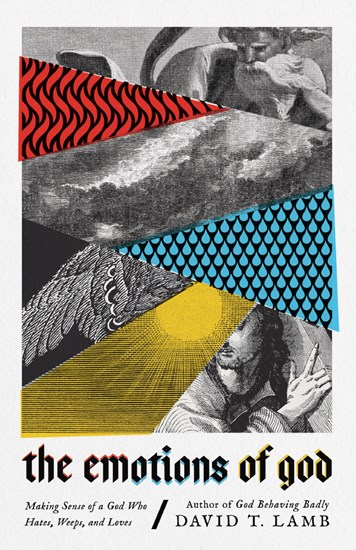
I’m the divine anger guy.  I’ve written articles recently on ”Wrath” in the Dictionary of the Old Testament: Prophets (IVP Bible Dictionary) and Divine Wrath and Divine Compassion in Holy War in the Bible: Christian Morality and an Old Testament Problem.

So, when I was looking at the CBS news website today and I ran across an interview with Ian Punnett, author of How to Pray When You’re Pissed at God: Or Anyone Else for That Matter I was intrigued.  Human anger?  Perhaps a new topic to focus on?

Here’s the link if you want to listen to the interview with the author.  It’s good.

I haven’t bought the book yet, but I probably will just based on the title.  It’s currently in the top 200 on Amazon and the #1 book on prayer right now.

He starts out with an angry tweet from Steve Johnson, wide receiver for the Buffalo Bills who was pissed at God (after he dropped a pass).  Johnson took flack for his angry outburst since people think that pious people don’t talk like that to God, but Punnett thinks he shouldn’t have.  Scripture is full of people who are angry at God.

I could have used this book during the fall when I didn’t understand what God was doing in my life.  I will probably have opportunities in the future when this book will be relevant to my life.  Although, it would be OK if I didn’t.

How do you pray when you’re pissed at God? 

Be careful, though, you don’t want to get struck by lightning.

Remember your word to your servant,
in which you have made me hope (Psalm 119:49)

String ReminderWhat types of people do you need to say “Remember” to?  People who forget.

Just last night several unnamed members of my family forgot to put dishes in the dishwasher.  So, I reminded them, but surprisingly, they didn’t seem to appreciate my reminder.

As I was working on this I couldn’t remember if I’d blogged on this topic before, so I did a quick search and found this post on “Delighting and Forgetting” based on Psalm 119:16.  Similar, but different.

One would think that divine beings wouldn’t need to be reminded, right?  Does God forget?  I think that the “right” answer is “no”, but then I read the Bible and I’m not so sure.

The author of Psalm 119 is not unique in regards to reminding God.  Interestingly, lots of people in the Old Testament feel a need to remind God to remember.

Moses (Exo. 32:13);
Samson (Judg. 16:28),
Hannah (1 Sam. 1:11),
Solomon (2 Chron. 6:42),
Hezekiah (2 Kgs. 20;30),
Nehemiah (Neh. 1:8; 5:19),
the
psalmist (Psa. 74:2; 89:50),
the author of Lamentations (Lam. 5:1).  

(Notice how I arranged those from shortest to longest?  Freaky, huh?)

That’s an impressive list of divine reminderers (I spelled it that way intentionally).  Do all these people think God forgets?  I’m not sure, but they clearly think it’s OK to nag God about his responsibilities (put your dishes away, remember your word to your servant).

So, why does the author of Psalm 119 (and all these other OT people) tell God to remember?

1) Because God forgets?
2) Because it seems like God forgets?
3) Because the psalmist forgets that God doesn’t forget?

The answer to this question is not clearly found in this verse, but I’m certain that there are times that I forget (#3) and that it seems like God is forgetting (#2).

And I’m also certain that even though I get offended when people remind me about something (“Don’t you trust that I’ll remember?”), God doesn’t.  If he does get offended he shouldn’t have authorized so many of his godly people in Scripture to remind him to remember.

Lest we accuse the psalmist here of arrogance to remind God, he does refer to himself as God’s servant, and the psalmist is clearly in a place of desperation, waiting in hope for God to act.

Once again, Psalm 119 provides a model of bold prayer for us, reminding us to remind God.  Don’t forget.

What do you remind God of?  Which answer (choice 1, 2 or 3) would you give for the question above?

I’ve moved (finally) to the 7th letter of the Hebrew alphabet (zayin) and therefore the 7th section of Psalm 119 (verses 49-56, see below).  The Hebrew verb “remember”, zakar, begins with the letter zayin (see 119:55 below).

Zayin

Gods Favorite Place on Earth

“My name Bethany only means ‘house of figs’ or perhaps ‘house of the poor.’”

In one of my classes we were discussing how important names are in the Bible, how your name was who you are, your essence.  Bethany wasn’t excited about her name.

I told her, “I have a book for you.  You’ll love it.  A book about Bethany, and it’s hard to imagine a name that has more positive connotations.”  She was intrigued.

My friend Frank Viola has just released a new book, God’s Favorite Place on Earth.  In it, he observes that when Jesus was on the earth, he was rejected everywhere he went . . . from Bethlehem, to Nazareth, to Jerusalem. The only exception was the little village of Bethany.

Here is my endorsement for God’s Favorite Place on Earth:

“Frank Viola’s creative narrative, engaging discussion and insightful commentary on Jesus’ association with the village of Bethany spoke to my heart, challenged my lifestyle, and fed my soul.”

As you read his retelling of biblical stories about Jesus centering on his associations with the village of Bethany, I would hope that it would deepen your relationship with God and fed your soul as well.

In addition, if you get the book between May 1st to May 7th, you will also get 25 FREE GIFTS from 15 different authors including Leonard Sweet, Jeff Goins, Andrew Farley, Steve McVey, DeVern Fromke, Pete Briscoe, Frank Viola himself, and many others.

Go to GodsFavoritePlace.com to claim your 25 FREE GIFTS, read a Sampler of the book, and watch the video trailer.

Holy War Cover

What about the Amalekites?  God told Saul to wipe them out, but the people Saul was supposed to wipe out weren’t the ones that attacked Israel.  That doesn’t seem fair.”  (See 1 Samuel 15.)

I was speaking at the InterVarsity group at Johns Hopkins a few weeks ago and one of the students asked me this question.  My response, “What do you think?”

Problems like these about the warlike nature of God trouble anyone who reads through the pages of the Old Testament.  I discuss this issue in God Behaving Badly, but (as people love to point out) my discussion there isn’t particularly academic.

For a more in-depth discussion of the topic, check out this new book:

Holy War in the Bible: Christian Morality and an Old Testament Problem edited by Heath A. Thomas, Jeremy Evans and Paul Copan, from IVP academic.  

It looks fascinating, but I may be a bit biased since I contributed an article to the volume.

Holy War in the Bible contains fourteen articles, plus an introduction and an afterword.

Here’s a list of the other contributors:

Geth Allison and Reid Powell; Douglass S. Earl (2 articles); Stephen B. Chapman; Heath A. Thomas; Timothy G. Gombis; Alan S. Bandy; Daniel R. Heimbach; Paul Copan and Matthew Flannagan; Glen Harold Stassen; Robert Stewart; Murray Rae; Stephen N. Williams

My contribution discusses the motivations for divine warfare and I conclude that wrath against injustice and compassion for the oppressed motivate divine warfare.  I like how the introduction puts it, “Lamb holds that God violently intervenes in order to uphold his will for the world, while not acting out of capricious rage or frivolous wrath” (p. 14).

If you’re interested in understanding warfare in the Bible, check out this article I wrote for Relevant Magazine on the topic of the Canaanite genocide, “Reconciling the God of Love with the God of Genocide.”  (To read the full-article you’ll need to register, which will allow you to read free content for 5 articles.)

To see a list of other books I’ve written or contributed to, click here.

I ended up telling the Hopkins student that he was asking a great question and that I assume whenever God delays a judgment he’s giving people opportunities to repent.  So while the text doesn’t make this clear in 1 Samuel 15, the Amalekites did not repent of their violent behavior.  God is slow to anger, but he gets there eventually.  Interestingly, in that same passage, mercy is shown to the Kenites, who showed hospitality to Israel as they entered the land (1 Sam. 15:6).  If the Amalekites had shown mercy to Israel, they would have been shown mercy as well.

balaams ass“God is not man, that he should lie or a son of man that he should change his mind (naham)” (Num. 23:19).  Thus, Divine Immutability.

“So the LORD changed his mind (naham) about the harm which he said he would do to his people” (Exo. 32:14).  Thus, Divine Mutability.

So the Bible clearly teaches both that God doesn’t change his mind and that he does change his mind.  And both texts use the same Hebrew verb, naham.

If you’re uncomfortable with this translation of Exo. 32:14 (ESV), perhaps you’d prefer the King James Version which says “the LORD repented of the evil which he thought to do unto his people”.  God had to repent of evil?  On 2nd thought, the KJV sounds worse.

So, how do we resolve this biblical tension?

In a word, “Context.”

I realize not all of you have read God Behaving Badly where I discuss this topic in chapter 7, so if you’re interested in my longer than one word answer, but you don’t want to fork out $11 to buy the book, you can listen to this sermon podcast here “Is God Rigid or Flexible? (30 minutes).  I preached at Grace Bible Church of Souderton (April 28, 2013).  The sound is a little weak for the first minute, but then gets much better.  The website also includes my sermon from the previous week, “Is God Angry or Loving?” (30 minutes; April 21, 2013).

I conclude that God is predictably flexible,  consistently changeable and immutably mutable in regards to showing mercy toward repentant sinners.  That’s good news for me.  I’m a sinner.  (But don’t tell my family–they haven’t realized that yet.)

What do you think, does God change?  

Image of ‘Balaam’s Ass” (from Numbers 22-24) by Rembrandt from http://www.wga.hu/index.html.

Tiberius DenariusSo, April 15 will be over in a few hours.  It’s probably time to start working on those taxes, but if you want something to help your procrastinate just a little bit longer, check this out:

Rendering to God What Is God’s (April 15).

For today’s blog on Biblical’s website I focus on taxes, specifically what Jesus says about taxes, it involves a coin.

Jesus tells Peter to go fishing for his tax payment (Matt. 17:24-27), so you can try that if you’re stuck this year, but that’s not the text I look at in this blog.


The Eye-Whacker 2000

Eye Whacker 2000Something is in your eye.  It’s irritating.  It’s driving you crazy.  You eyeball is red and bloodshot, what do you do?

You force your eyelid open with your hand, lean your head back and attempt to drop Visine into your naked, irritated eyeballs.  Most of the Visine ends up in your hair, cheeks and mouth, and the ones that hit the target sting.

There’s got to be a better way.

Finally, there is.

With the help of my wife Shannon, I’ve invented the Eye-Whacker 2000.  No more Visine dripping down all over your face.

The premise of the Eye-Whacker is quite simple.  Just whack the dust, dirt or hair right out of your eyeball, as I’m demonstrating on my eager son Noah in the picture.  (Nate lost the coin toss and had to take the picture.)

Don’t we all need someone else to help us remove things from our eyes?  Who better than someone wearing the Eye-Whacker 2000?  (The EW 1000 had design problems, which have been resolved with the EW 2000.)  Since the pipe insulators are taped to the bandanna around my head, my hands are free.  It’s genius.

I will admit, it’s better to be doing the Whacking, than being Whacked.  But remember, it’s for their own good.  And who better to Whack than me?  I’m quite good at Whacking things out of people’s eyes.

I showed Eye-Whacker 2000 to my Sunday school class this morning before we looked at the Sermon on the Mount (chapter 7).  After some initial hesitation, many volunteers eagerly got Whacked.

And people say Jesus didn’t have a sense of humor…

Follow

Get every new post delivered to your Inbox.

Join 199 other followers